Collection: Louvre Museum; Paris

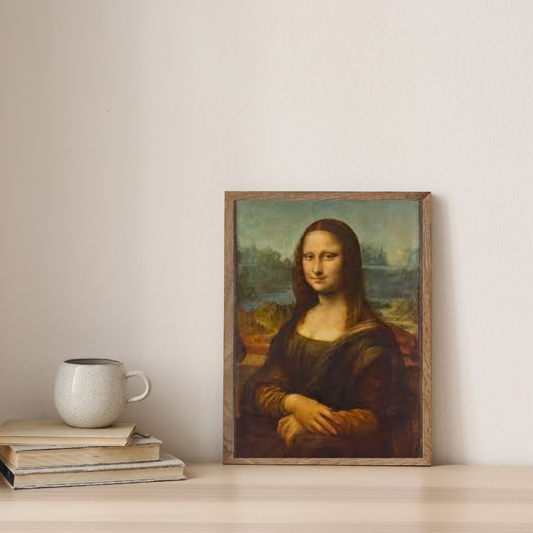
Housed within a grand Parisian palace on the site of a 12th-century fortress, the Louvre is the national museum of France and the most-visited art museum in the world. Its vast collection, which includes masterpieces like Leonardo da Vinci’s Mona Lisa, spans the scope of human creation from ancient civilizations to the art of the mid-19th century.
From Fortress to Royal Palace
The Louvre’s history began as a medieval fortress built for Philip Augustus. In 1546, King Francis I, a great art collector, had the original castle razed and began constructing a new royal residence on the site. Nearly every subsequent French monarch added to the palace, with major expansions occurring in the 17th century under Louis XIII and Louis XIV. During this time, the royal art collection grew significantly with acquisitions by Cardinal de Richelieu and Cardinal Mazarin. The Louvre ceased to be the primary royal residence in 1682 when Louis XIV moved his court to Versailles.
The Birth of a Public Museum
The idea of transforming the Louvre into a public museum originated in the 18th century. This vision became a reality during the French Revolution when, in 1793, the revolutionary government opened the Musée Central des Arts in the palace’s Grande Galerie. The building continued to be expanded for this new purpose, with major additions made under Napoleon I and Napoleon III, eventually forming a vast complex of buildings around two large courtyards.
The Grand Louvre and the Pyramid
In the 1980s, the Louvre underwent a sweeping modernization project known as the “Grand Louvre,” designed to make the historic institution more accessible. A vast underground complex containing offices, shops, exhibition spaces, and other public amenities was constructed beneath the central courtyards. The entrance to this new area was placed in the center of the Cour Napoléon, crowned by the now-iconic, though once controversial, steel-and-glass pyramid designed by architect I.M. Pei. This phase culminated in 1993 with the opening of the rebuilt Richelieu wing, which had formerly housed France’s Ministry of Finance. For the first time in its long history, the entire Louvre palace was devoted to museum purposes.
The Louvre in the 21st Century
The Louvre’s growth has continued into the 21st century with architectural and global expansions. In 2012, a new wing for Islamic Art was opened, featuring a striking, undulating gold-colored roof designed by architects Mario Bellini and Rudy Ricciotti. That same year, the museum opened its first satellite location, the Louvre-Lens, in northern France, intended to boost the regional economy and alleviate crowding in Paris. This global outreach was further extended in 2017 with the opening of the Louvre Abu Dhabi, the result of a 30-year agreement to lease the Louvre’s name, expertise, and works to the new institution.
The Universal Collection
The Louvre’s collection is one of the world’s richest. Its Department of Paintings is unsurpassed in its holdings of French art from the 15th to the 19th centuries and features masterpieces by Italian Renaissance and Baroque painters. The Department of Decorative Arts showcases the treasures of French royalty. At the same time, several other departments are dedicated to antiquities, including major collections of Greek, Etruscan, Roman, Egyptian, and Near Eastern art, making the Louvre a truly universal museum.
-
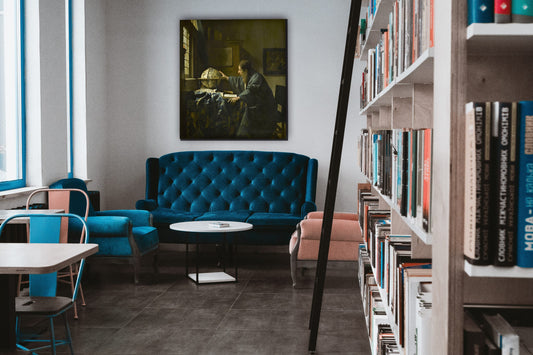
The Astronomer
Regular price From $396.00 USDRegular price -
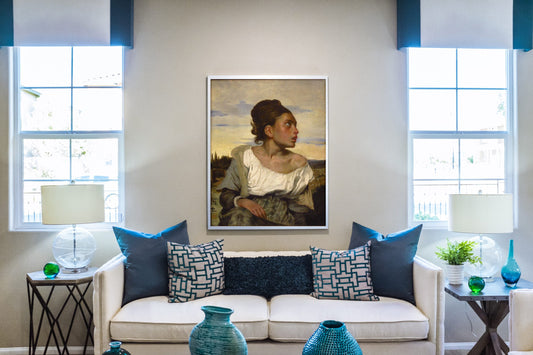
Orphan Girl at the Cemetery
Regular price From $396.00 USDRegular price -
Mona Lisa (La Gioconda)
Regular price From $356.00 USDRegular price