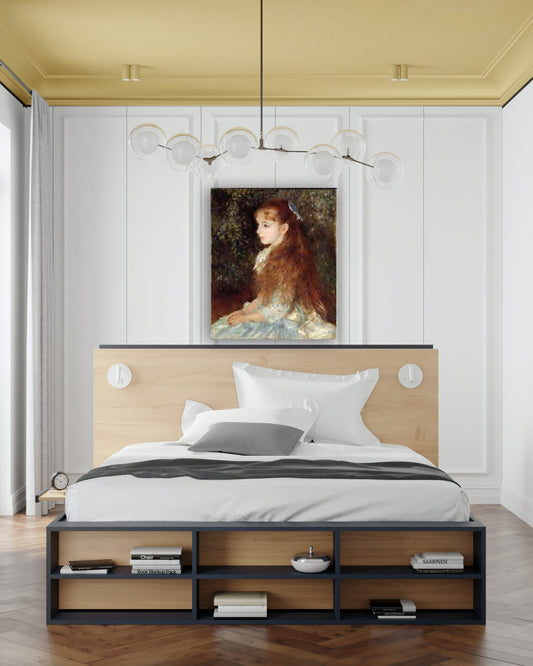
Collection: E. G. Bührle Collection Foundation; Switzerland
 Housed within the historic villa of a private collector in Zurich, the Foundation E. G. Bührle Collection is one of Switzerland’s most important art collections. Renowned for its exceptional holdings of Impressionist and Post-Impressionist painting, the collection features masterpieces by artists such as Claude Monet, Pierre-Auguste Renoir, and Vincent van Gogh. Though relatively compact in scale, it offers a focused and highly significant overview of European painting from the 19th and early 20th centuries.
From Private Collector to Public Foundation
The origins of the collection lie in the activities of the industrialist and art collector Emil Georg Bührle, who began acquiring works of art in the 1930s. Over the following decades, Bührle assembled an extraordinary group of paintings, with a particular emphasis on French Impressionism and its immediate successors.
His collection grew rapidly in both quality and scope, eventually becoming one of the most distinguished private collections of modern European art in Switzerland. After his death in 1956, the collection was preserved and made accessible to the public through the establishment of a foundation bearing his name.
A Collection of Impressionist Masterpieces
At the heart of the Bührle Collection is its remarkable concentration of Impressionist and Post-Impressionist works. The collection includes luminous landscapes by Monet, intimate scenes by Renoir, and powerful compositions by van Gogh, alongside works by artists associated with the transition to modern art.
This carefully assembled group of paintings reflects a pivotal moment in the history of European art, when artists began to move away from academic traditions toward new approaches to color, light, and perception.
Controversy and Recontextualization
In recent decades, the collection has also been the subject of renewed scholarly attention concerning the provenance of certain works. Questions related to acquisitions made during the era of World War II have prompted ongoing research into the history of individual paintings.
As a result, the foundation has undertaken efforts to investigate and document the origins of its holdings, contributing to broader discussions about collecting practices and cultural heritage in the 20th century.
A Collection in a New Context
In the 21st century, the presentation of the Bührle Collection entered a new phase with its integration into the Kunsthaus Zürich. Displayed within an expanded museum setting, the collection is now situated within a broader narrative of European art, allowing visitors to view these masterpieces in dialogue with works from other periods and movements.
Today, the Foundation E. G. Bührle Collection continues to offer a concentrated and influential survey of Impressionist and Post-Impressionist painting, making it a key destination for understanding the evolution of modern European art.
-
Irène Cahen D’Anvers
Regular price From $396.00 USDRegular price