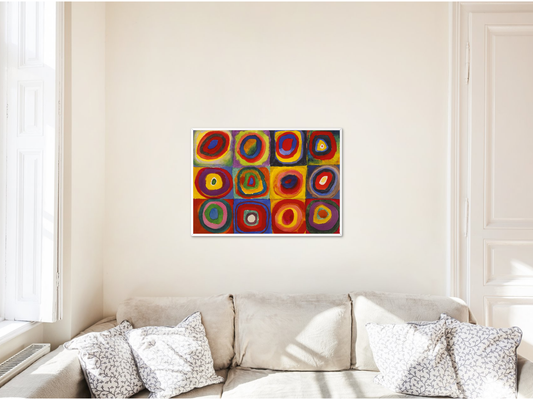
Collection: Lenbachhaus; Munich

Housed in the former villa of a 19th-century painter in Munich’s Königsplatz district, the Lenbachhaus is one of Germany’s most significant museums of modern art. Best known for its unparalleled collection of works by the Blue Rider movement, the museum holds masterpieces of early modernism alongside art from the 19th century and contemporary periods. Its galleries trace a crucial chapter in the history of European avant-garde painting, particularly the development of abstraction in the early 20th century.
From Artist’s Villa to Municipal Gallery
The Lenbachhaus was originally the residence and studio of the German painter Franz von Lenbach, one of the most celebrated portraitists of the late 19th century. Built between 1887 and 1891 in the style of an Italian Renaissance villa, the building served as both Lenbach’s home and a place to display his works and receive patrons.
After the artist’s death in 1904, the city of Munich purchased the property and transformed it into a public gallery dedicated initially to the art of the Munich School and to Lenbach’s own paintings. The museum soon expanded its mission, gradually incorporating works that reflected the emerging modern art movements of the early 20th century.
The Blue Rider Collection
The Lenbachhaus is internationally renowned for its collection of works associated with Der Blaue Reiter, a groundbreaking group of artists who sought new spiritual and expressive possibilities in art. Founded in Munich in 1911 by artists including Wassily Kandinsky and Franz Marc, the movement played a crucial role in the development of abstract painting.
A substantial portion of the museum’s holdings from this movement was assembled through the efforts of Gabriele Münter, a close associate of Kandinsky. After preserving many works from the period, Münter donated an important group of paintings to the museum in 1957, establishing the Lenbachhaus as the world’s leading center for the study of the Blue Rider.
Expansion and Modernization
Over the decades, the museum has undergone several expansions to accommodate its growing collection. A major renovation completed in 2013 added a striking new wing clad in golden metal panels, designed by the architectural firm Foster + Partners. The project modernized the museum’s exhibition spaces while preserving the historic villa at its core.
A Center for Modern Art
Today, the Lenbachhaus presents a broad spectrum of artistic movements, ranging from 19th-century Munich painting to Expressionism, the Blue Rider, and contemporary art. While its galleries highlight the revolutionary works of early modernism, the museum continues to expand its collection and programming, maintaining its role as one of Germany’s most important institutions for the study and display of modern art.
-
Color Study, Squares with Concentric Rings
Regular price From $180.00 USDRegular price